
Free DBT Wise Mind Worksheet
In DBT, wise mind is where emotion mind (feelings and urges) and reasonable mind (facts and logic) come together. This interactive worksheet walks you through 5 guided steps — writing what each side says, looking for where they meet, and choosing one wise mind step.
neuroviaxacademy.com/tools/wise-mind-worksheet.html
Wise Mind Reflection Report
Academic Citation
Neuroviax Academy. (2026). Wise mind worksheet: Free DBT mindfulness tool [Online worksheet]. https://neuroviaxacademy.com/tools/wise-mind-worksheet.html
How to Use This Wise Mind Worksheet
Name the situation
Write the decision or situation you are facing, then rate how strong your emotions are right now from 0 to 10. Naming it clearly is the first step toward seeing both sides.
Hear both minds
Write what emotion mind (feelings and urges) tells you to do, then what reasonable mind (facts and logic) says. Keep the two sides separate so neither is lost.
Find wise mind
Pause and breathe. Ask what both sides have right, then write what feels true and makes sense at the same time — the meeting point of emotion and reason.
Choose a wise mind step
Commit to one concrete step, note when you will take it, and re-rate your emotions (0–10). A drop can be a helpful sign, though these are self-ratings.
What Is Wise Mind?
In DBT, wise mind is the state where emotion mind (feelings and urges) and reasonable mind (facts and logic) come together. It is described as a calm, inner sense of knowing what is right for you. This worksheet lets you write down both sides and look for the step where they meet.
Emotion mind is driven by mood and urges; facts may seem less important. Reasonable mind is cool and logical; feelings may seem less important. Wise mind is reached by noticing both — not by ignoring either one.
This worksheet is a self-reflection and educational tool for academic purposes only. It does not provide therapy or a professional assessment, and it is not a substitute for treatment. The research cited concerns structured treatment or general findings, not this worksheet itself. If you have concerns, please consult a qualified professional.
Frequently Asked Questions
What are the three states of mind in DBT?
How do I find wise mind?
Is my worksheet saved?
Is wise mind the same as intuition?
Sources and credits
- Linehan, M. M. (2015). DBT skills training manual (2nd ed.). Guilford Press.
Credit: Wise mind and the three states of mind come from the dialectical behavior therapy skills developed by Marsha M. Linehan.
This page is an educational self-reflection worksheet. It does not provide therapy, and the research cited concerns structured treatment or general findings, not this worksheet itself.
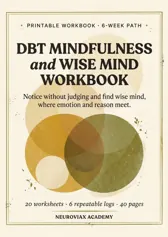
Go further: the printable DBT Mindfulness and Wise Mind Workbook
A printable PDF workbook with fill-in worksheets, trackers and a reading guide, in A4 and US Letter. Look inside before you decide.
See what is insideOr save 51% with the DBT Skills Workbook Bundle: 5 workbooks for $16.99 instead of $34.95.