
Group Mode: Three Roles & 2-Minute Timer
Round timer
2 minutes per round, silent visual timer.
Joining in a game
Asking kindly helps you join the fun without interrupting the game.
Choose any skill card (16)
Practice Coach: Joining in a game
0 of 5 steps done1. Talk about it
To do2. Watch
To doThe adult (or leader) acts out the scene first while the child watches the steps. Flip the card above if you want to read the scene together.
3. Try
To doNow the child or teen acts out the You part. Keep it short and friendly. You can also switch roles so they play the Partner too.
4. Feedback
To doPraise first, then pick one small tip for next time. Writing one good thing marks this step done, or tick the box if you shared feedback out loud.
5. Practise this week
To doPick a real place and time to try this skill this week. Tick the box when you have tried it to earn the star on this card.
My Skills Shelf
0 of 16 starsFinish all 5 Practice Coach steps on a card to light up a star on your shelf.
For adults: how to run a role play and safety note
How to run a role play
- Keep it short: Aim for 2 to 5 minutes on one card while everyone is calm and rested.
- Praise first: Name one specific thing the child did well before offering one small tip for next time.
- Switch roles: Let the child play the Partner too. Playing the other side helps them notice how friendly words and calm tone feel.
- Keep it playful: Laughing at a silly first try lowers pressure and makes real-life practice more likely.
Why practice with feedback matters
Role play with feedback is the core of how social skills are taught. Research on social skills training for children and young people notes that showing a skill, acting it out, giving encouraging feedback and practising in everyday life matter much more than only talking about rules (Spence, 2003). These cards work best as one part of a wider plan at home or school.
When worry or anger gets in the way
Sometimes a child knows the words to use, yet strong worry or anger makes it hard to use the skill in the moment. Pausing to notice and calm big feelings first helps. You can use the Feelings Thermometer together to check how big a feeling is before trying a role play.
Your stars and notes stay in this browser on this device and are never sent anywhere.
Social Skills Role-Play Cut-Out Cards
Cut along the outer dashed lines, then fold along the middle dotted line so the skill name sits on the front and the steps sit on the back.
My Social Skills Practice Log
| Date | Skill | Where & when | How it went (good thing + next tip) | Star |
|---|
Using Social Skills Role-Play Cards at Home, School and in Groups
Many children and teens understand social rules when things are calm, yet freeze or get frustrated when the real moment arrives. Social skills worksheets work best when they move off paper and into short, active practice. These interactive role-play cards give parents, carers, teachers and school counsellors a simple structure for practising 16 everyday skills one at a time, with printable cut-out cards and a one-page practice log.
What social skills role play is
Social skills role play is a short rehearsal of a real-life moment before it happens. Instead of giving a long lecture after a tough playground conflict or a bumpy family board game, an adult and child pick one clear skill, read three or four short steps, and act out a brief fictional scene together. Because the scene is pretend, the child can try out words, test a calm voice, make a mistake and try again without real-world embarrassment. Over time, those rehearsed phrases feel much easier to reach for when a similar situation comes up with friends, classmates or siblings.
How to run role play step by step
Structured social skills training usually follows five steady steps: tell, show, try, feedback and practise. The Practice Coach on this page walks through the same five steps for every card:
- Tell (Talk about it): Start with one plain sentence about why the skill matters, such as how waiting for a pause makes it easier for others to say yes when you ask to join a game.
- Show (Watch): The adult acts out the scene first while the child watches. Showing what a calm tone and simple words look like teaches far more than explaining alone.
- Try: The child acts out the You part in the scene. Keep it light and short. Switching roles so the child also plays the Partner helps them see how the skill feels from the other side.
- Feedback: Always start with one specific thing the child did well, then offer one small tip to try next time. Specific praise builds confidence without turning practice into a test.
- Practise: Agree on one real place and time to try the skill during the coming week, then mark the star once they have given it a go.
Social skills activities by age
The same social skill looks very different at age seven than it does at age fifteen. Use the age filter at the top of the deck to switch every card between three levels so the wording fits the young person sitting beside you.
| Age band | Focus skills | How practice works best |
|---|---|---|
| Ages 6 to 8 | Joining in a game, taking turns, sharing, losing a game well, waiting to talk, asking for help | Short 2-minute playful scenes with an adult, concrete phrases of four to six words, and visible stars on the shelf. |
| Ages 9 to 12 | Handling teasing, keeping a chat going, saying sorry, winning kindly, disagreeing politely, listening | Everyday school, club and sibling scenes, role-swapping so kids test both sides, and a simple weekly goal. |
| Teens | Saying no kindly, disagreeing politely, starting and keeping chats, listening without screens, making a new friend | Respectful peer wording, realistic group or hallway situations, and collaborative planning rather than top-down scripts. |
Using the cards in a group or classroom
In a small group, counselling room or classroom circle, turn on Group mode to display three clear roles: Player, Partner and Watcher. Set the silent 2-minute visual timer, run one short scene, and let the Watcher name one thing that worked well plus one gentle suggestion. Then click Switch roles so everyone gets a turn in each spot. Keep groups small when possible so nobody waits too long, and pair quieter students with a supportive partner first. For more structured ways to run small sessions with young people, see our guide to group therapy activities.
Ideas for teens
Teens often pull back if an activity feels childish or scripted. Choose the Teens filter so every scene uses natural peer language around group projects, sports, lunch tables and everyday boundaries. Let the teen choose which card feels relevant this week rather than assigning one, and invite them to edit the You line into words they would actually say. Keeping rounds brief, skipping cheesy praise and focusing on real situations they care about makes role play practical rather than awkward.
What the research says
In a review of social skills training for children and young people, Spence (2003) explains that programmes typically combine clear instructions, modelling, behaviour rehearsal through role play, feedback and positive reinforcement, often alongside problem solving and reading social cues. The review also notes two important limits. First, knowing a skill is not always enough when strong worry or anger gets in the way, so young people often need help with calming and emotion regulation too. Second, social skills training on its own is unlikely to produce large lasting change; it works best as one part of a wider plan that includes practice in real settings with supportive adults and peers.
When to get more help
Role-play cards are an educational practice tool, not a diagnosis or a medical service. If a child or teen is facing ongoing bullying, strong anxiety that stops them attending school, frequent aggressive outbursts or deep loneliness that does not ease with everyday support, speak with a school counsellor, family doctor or qualified child mental health professional. If a child is in danger or talks about hurting themselves, stay with them and contact your local emergency number or a doctor now.
Frequently Asked Questions
What are social skills role-play cards?
What ages are these social skills activities for?
How long should each role-play practice take?
How do I use the five steps in the Practice Coach?
Can I use these social skills worksheets with a classroom or small group?
Can I print the cards and practice log as a PDF?
Are my child's notes and stars saved online?
Sources and credits
- Spence, S. H. (2003). Social skills training with children and young people: Theory, evidence and practice. Child and Adolescent Mental Health, 8(2), 84-96. https://doi.org/10.1111/1475-3588.00051
Credits: The 16 role-play cards, illustrations, age-band scripts and printable practice log on this page are our own, structured around the tell, show, try, feedback and practise steps described in social skills training literature.
This page is an educational practice tool. It does not provide a diagnosis or replace professional care.
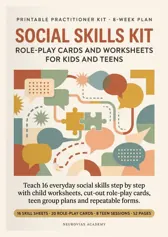
Go further: the printable Social Skills Kit
A printable kit with 16 skill worksheets, cut-out role-play cards, eight teen group sessions and feedback forms, in A4 and US Letter. Look inside before you decide.
See what is insideOr save 39% with the School Counsellor Library: 4 workbooks for $21.99 instead of $35.96.