
Anger Iceberg Worksheet
The anger iceberg is a common teaching picture. The anger we show is the tip above the water. Under the water sit other feelings, such as hurt, fear, shame, sadness, or a tired and stressed body. The idea is often taught in anger management and in couples work. It is a teaching aid, not a scientific model, and no single author or brand owns it.
This worksheet asks what happened, what showed above the water, and what might sit beneath the anger. You rate each hidden feeling from 0 to 10, name what you need, and choose one thing you can do. The drawing updates as you go, and the finished page prints with your own words.
Build Your Anger Iceberg
Write what happened, pick what showed, then choose up to six feelings that may sit under the anger. Rate each one and note what you need. Auto-saved.
Each card needs a strength from 0 to 10. The need and the action are optional, but they are often the most useful part.
neuroviaxacademy.com/tools/anger-iceberg-worksheet.html
Your Anger Iceberg
What showed sits above the water. The feelings you chose sit beneath it, with the strongest ones written larger. Use the plan at the end to decide what you need next.
What happened
What showed
| Feeling | Group | Strength | Need | Action |
|---|
Your next step
Safety and limits
This worksheet is for self-reflection and learning. It is not a treatment for anger problems and gives no diagnosis. If your anger leads to violence, threats or fear in your home, please get help from a professional or a local support service. If you feel unsafe right now, call your local emergency number, or find a free crisis line in your country at findahelpline.com.
Cite this worksheet
Neuroviax Academy. (2026). Anger iceberg worksheet: Free interactive and printable [Online worksheet]. https://neuroviaxacademy.com/tools/anger-iceberg-worksheet.html
How to Use This Anger Iceberg Worksheet
Name the moment
Write what happened in one or two plain sentences. A short, factual note works better than a long story. Include what you were doing just before the anger arrived.
List what showed
Pick the things another person would have seen or heard. Shouting, snapping, going silent and walking out all count. This is the tip above the water.
Look under the water
Choose up to six feelings that might sit beneath the anger. The groups, such as hurt, fear, shame, sadness and body state, make the list easier to scan.
Rate, name the need, plan
Give each feeling a strength from 0 to 10, name what you need, and write one thing you can do. The drawing updates as you go, and the last page prints your plan.
Understanding the Anger Iceberg
This worksheet turns a familiar image into a short piece of self-reflection. It does not decide what you feel. It gives you a place to put the moment, the visible part, and the part that usually stays hidden, then asks what would help. The sections below explain where the picture comes from, why anger is often called a secondary emotion, and how to use the same drawing with children and teens.
What is the anger iceberg?
The anger iceberg is a common teaching picture. The anger we show is the tip above the water. Under the water sit other feelings, such as hurt, fear, shame, sadness, or a tired and stressed body. The idea is often taught in anger management and in couples work. It is a teaching aid, not a scientific model, and no single author or brand owns it. The picture is useful because it slows the moment down. Instead of asking how to stop shouting, it asks what the shouting was protecting. A person who feels let down may look angry on the surface. A person who is exhausted may snap at small things. Naming the layer underneath gives you more options than trying to force the anger down. The drawing and the word lists on this page are our own.
Why anger is called a secondary emotion
Anger is often called a secondary emotion because it often follows or covers another feeling, such as hurt or fear. The word secondary does not mean the anger is less real or less important. It means the anger tends to arrive second, after something else has already happened. This is not always the case. Some anger appears quickly and on its own, and that is normal too. The value of the iceberg is that it offers a second look without denying the first one. If you always treat anger as a cover, you may miss the times when it is a direct response to a real boundary being crossed. A fair use of the picture is to stay curious. Ask what else was present, and accept that the answer may be nothing more than a long day.
Using the anger iceberg with children and teens
Children and teens can use the same picture with fewer and simpler words. An adult can draw the iceberg on paper, with a small tip above a wavy line and a large shape below. The child names what showed, then the adult offers a short list of feelings: hurt, scared, embarrassed, sad, tired. Drawing it together keeps the task concrete. Keep the language plain and avoid labels that sound like a diagnosis. A short conversation after the drawing often works better than a long one. The table below gives examples of what may show, what may sit under it, and what may help.
| What shows | What may be under it | What may help |
|---|---|---|
| Shouting | Hurt or feeling not heard | Ten minutes of full attention |
| Going silent | Overwhelmed or afraid of saying the wrong thing | A pause with a clear time to return |
| Sarcasm | Disrespected or embarrassed | A calm sentence about what felt unfair |
| Walking out | Powerless or flooded | Time alone with an agreed return time |
| Clenched fists or jaw | Stressed or in pain | Rest, food and a slower pace |
A worked example: Maya's Tuesday evening
Maya, 34, came home after a long shift. She had been looking forward to telling her partner about a difficult meeting. Her partner checked their phone while she was talking. Maya shouted, then walked out to the kitchen. On the worksheet she wrote that she shouted and walked out. Under the water she placed hurt at 8, disrespected at 6, tired at 8 and lonely at 4. Her need for hurt was to be heard, and her one action was to ask for ten minutes of full attention. For tiredness she chose rest, and wrote that she would eat and rest before big talks. The drawing showed two feelings at 8, so the page did not name a single strongest one. Because tiredness was rated 8, the next step pointed to rest, food and stress first. Maya did not solve the evening. She left with a clearer sentence to say and a plan for the next hard conversation.
Limits
This worksheet is for self-reflection and learning. It is not a treatment for anger problems and gives no diagnosis. If your anger leads to violence, threats or fear in your home, please get help from a professional or a local support service. If you feel unsafe right now, call your local emergency number, or find a free crisis line in your country at findahelpline.com.
Frequently Asked Questions
What is the anger iceberg?
Why is anger called a secondary emotion?
How do I use an anger iceberg worksheet?
Can kids use the anger iceberg?
Is there an anger iceberg PDF?
Is my worksheet saved?
Sources and credits
- Sukhodolsky, D. G., Kassinove, H., & Gorman, B. S. (2004). Cognitive-behavioral therapy for anger in children and adolescents: A meta-analysis. Aggression and Violent Behavior, 9(3), 247–269. doi.org/10.1016/j.avb.2003.08.005
Credits: The anger iceberg is a widely used teaching picture with no single author. The drawing and word lists on this page are our own.
This page is an educational worksheet. It does not provide therapy, diagnosis or a treatment plan.
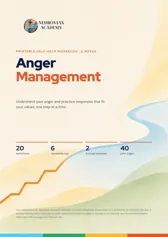
Go further: the printable Anger Management Workbook
A printable PDF workbook with fill-in worksheets, trackers and a reading guide, in A4 and US Letter. Look inside before you decide.
See what is insideOr save 43% with the Emotional Skills Bundle: 4 workbooks for $15.99 instead of $27.96.
Print Your Anger Iceberg
Enter your email to generate and print your iceberg with your own feelings and plan.