
Record Bullying Facts and Build a School Action Plan
When bullying happens, clear dates and plain facts make it easier to talk with the school and protect the young person. Move through eight short steps to build a live incident timeline, note how daily life is affected, and print a calm, factual summary to bring to a meeting.
For professionals (counsellors, teachers and school staff)
This template supports structured fact-gathering during a pastoral, safeguarding or family consultation. Encourage initials rather than full student names when used on shared hardware, and keep browser saving turned off.
The 0 to 10 impact sliders are informal self-ratings to guide conversation, not a validated screening measure. Follow your school's safeguarding policy immediately if threats, physical injury, coercion or self-harm thoughts are disclosed.
neuroviaxacademy.com/tools/bullying-incident-log.html
Factual Bullying Summary and Action Plan
Research Citations
Modecki, K. L., Minchin, J., Harbaugh, A. G., Guerra, N. G., & Runions, K. C. (2014). Bullying prevalence across contexts: A meta-analysis measuring cyber and traditional bullying. Journal of Adolescent Health, 55(5), 602-611. https://doi.org/10.1016/j.jadohealth.2014.06.007 Gaffney, H., Ttofi, M. M., & Farrington, D. P. (2019). Evaluating the effectiveness of school-bullying prevention programs: An updated meta-analytical review. Aggression and Violent Behavior, 45, 111-133. https://doi.org/10.1016/j.avb.2018.07.001 Arseneault, L. (2018). Annual Research Review: The persistent and pervasive impact of being bullied in childhood and adolescence: Implications for policy and practice. Journal of Child Psychology and Psychiatry, 59(4), 405-421. https://doi.org/10.1111/jcpp.12841
How to Use This Bullying Incident Log
Set Context & Types
Choose who is filling in the form and select every type of bullying involved, from physical and verbal to social or online.
Log Plain Facts
Add each incident with date, location or app, who was involved, witnesses and saved evidence. Watch the timeline build automatically.
Track Impact & Online Safety
Rate how sleep, school, mood and friendships are affected, and tick practical online safety steps if digital platforms are involved.
Prepare School & Safety Plans
List school contacts, specific requests, follow-up dates, everyday safe people and places, and urgent escalation steps before printing.
Understanding Bullying and How a Factual Log Helps
Bullying is more than a rough day or a single argument between friends. Researchers describe bullying as unwanted, intentional behaviour that happens repeatedly and involves an imbalance of power, such as physical strength, group status, or online reach. It takes four main forms: physical (hitting, pushing, blocking, or damaging belongings), verbal (name-calling, insults, or spoken threats), social (deliberately excluding someone, spreading rumours, or turning peers against them), and online or cyberbullying (hostile messages, altered photos, impersonation, or exclusion in group chats and games).
Signs a Child or Teen May Be Experiencing Bullying
Many children and teenagers hide bullying because they feel embarrassed, fear making things worse, or worry that adults will take away their phone. Common signs include sudden trouble sleeping, stomach aches or headaches before school, asking to stay home, falling grades, pulling away from friends, coming home hungry or with damaged items, and becoming quiet or upset after checking messages. None of these signs proves bullying on its own, so they are best taken as a prompt for a calm, open check-in.
What Research Shows About Bullying and School Programmes
A meta-analysis by Modecki and colleagues (2014) found that cyberbullying was less common than traditional face-to-face bullying, and that young people involved in one setting were often involved in the other. Looking at longer-term outcomes, Arseneault (2018) reviewed evidence showing that being bullied in childhood and adolescence is linked with distress and mental health symptoms, and that these effects can persist into midlife. Stopping the behaviour is essential, and ongoing emotional support for the young person matters just as much. For schools, Gaffney, Ttofi, and Farrington (2019) reviewed 100 evaluations of school anti-bullying programmes and found that, on average, structured programmes reduced bullying, though the average effects were modest. Consistent follow-through by adults remains key.
How to Talk With Your Child Without Blame
When a child or teen opens up, your first reaction sets the tone. Pause, listen without interrupting, and thank them for telling you. Reassure them clearly that bullying is not their fault and that they do not have to handle it alone. Avoid rushing to confront another family directly or promising to keep serious safety risks secret. Instead, ask what feels hardest right now and involve them, especially teenagers, in deciding what to ask the school for.
How to Work With the School Step by Step
A dated, factual incident log helps school staff respond quickly and fairly. Stick to what was seen, heard, or saved: dates, places, names or initials, exact words or actions, witnesses, and any screenshots. Email the right contact, such as a form tutor, head of year, school counsellor, or principal, to ask for a focused meeting. Bring a printed summary and agree on concrete actions, such as extra supervision in specific hallways or at bus stops, a named safe adult during the school day, and clear follow-up dates. If the pattern continues after the follow-up date, escalate calmly in writing to senior leadership or the school district.
Practical Steps for Cyberbullying
Online bullying can follow a young person home, so quick, steady steps help contain it. First, do not reply to hostile messages, because arguing back rarely stops the behaviour and can complicate school reviews. Second, save clear screenshots that show the full text, sender handle, app name, and date. Third, block the account or leave the group chat, and adjust privacy settings. Fourth, report the content inside the app or game and keep any confirmation details. If classmates are involved, share the saved evidence with the school.
If Your Child Is Bullying Others
Finding out that your child has hurt or excluded someone else is painful, and a calm, firm response works better than shame. Separate the behaviour from who your child is, state clearly that hurting others is not acceptable, and avoid minimising it as harmless teasing. Ask curious questions about what is happening in their peer group, stress at school, or habits online. Help them plan a genuine repair, practise respectful boundaries and empathy, and partner with a teacher or counsellor if the pattern continues. Families working on peer communication can also look at our printable Social Skills Kit for Kids.
Supporting Recovery and Everyday Safety
Alongside stopping the bullying, help the young person stay connected to kind peers, enjoyable activities, and reliable adults. Talking through safe bystander skills, such as sitting near a friend, moving toward a trusted adult, or checking in on someone who was left out, also helps young people feel less isolated. Mapping who they can turn to using the Support Network Map makes everyday backing visible. If distress grows or there are worries about self-harm, build an immediate backup plan with our Personal Safety Plan Builder and contact a doctor, counsellor, or crisis line right away.
Frequently Asked Questions
What counts as bullying rather than a one-off argument?
Why should I write down plain facts instead of opinions in a bullying log?
Are my notes saved online or sent anywhere?
Can a teenager fill out this bullying log on their own?
Does this tool give a bullying severity score or assessment?
What should I do first if the bullying is happening online?
What if the bullying involves threats, injuries, or thoughts of self-harm?
Sources and Research Notes
- Modecki, K. L., Minchin, J., Harbaugh, A. G., Guerra, N. G., & Runions, K. C. (2014). Bullying prevalence across contexts: A meta-analysis measuring cyber and traditional bullying. Journal of Adolescent Health, 55(5), 602-611. https://doi.org/10.1016/j.jadohealth.2014.06.007
- Gaffney, H., Ttofi, M. M., & Farrington, D. P. (2019). Evaluating the effectiveness of school-bullying prevention programs: An updated meta-analytical review. Aggression and Violent Behavior, 45, 111-133. https://doi.org/10.1016/j.avb.2018.07.001
- Arseneault, L. (2018). Annual Research Review: The persistent and pervasive impact of being bullied in childhood and adolescence: Implications for policy and practice. Journal of Child Psychology and Psychiatry, 59(4), 405-421. https://doi.org/10.1111/jcpp.12841
This page is an educational planning worksheet. It is not legal, medical or psychological advice, and it does not replace safeguarding procedures or professional care.
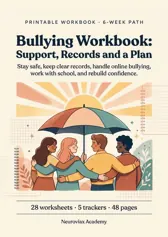
Go further: the printable Bullying Workbook
A workbook with incident logs, online safety steps, school meeting planners, confidence builders and pages for parents and school staff, in A4 and US Letter. Look inside before you decide.
See what is insideOr save 46% with the Teen Wellbeing Pack: 4 workbooks for $12.99 instead of $23.96.